Sunday, May 27, 2012

The World of Children of Apollo - Part V - Etruria


In the previous installment we visited Rome, the centre of the world when the Roman Empire was at its greatest extent. We will now leave that ancient city for an even more ancient landscape. What we know today as Tuscany, the central and western region of Italy, was then part of the larger central Italian kingdom of Etruria. This region plays a large role in Children of Apollo, as it is the ancestral land of Lucius Metellus Anguis’ family. For them, the family estate is a place of childhood memory, of escape and of mystery. Their roots run deep in that ancient land.

The Chimera of Arezzo
I won’t go into detail about the history of the Etruscans here, suffice it to say that Etruscan culture was the dominant and more advanced culture in the Italian peninsula around 650 B.C and their realm included not only modern Tuscany but also Umbria, Latium and Emilia-Romagna. Indeed Etruscan kings ruled Rome itself until about 509 B.C. when the last king, Lucius Tarquinius Superbus, was expelled from Rome by Lucius Junius Brutus, who led the uprising. With the rape of Lucretia by the king’s son, Sextus Tarquinius, Etruscan kingship in Rome ended.

Etruscan Tomb Interior
However, the Etruscans left a legacy and influence over the Roman people, other than a hatred of kingship. The Etruscan kings were also responsible for much of Rome’s architecture and religious practices. Etruscan artwork too is stunning and, though it had a great deal of Hellenic influence due to trade with Greece, it has a style all its own, be it the massive, bronze burial urns, the elaborately painted tombs or the magnificent Chimera of Arezzo. To see a magnificent collection of Etruscan artefacts, the archaeological museum in Bologna is a definite must.

Tuscan Landscape
History aside for a moment, the thing that inspired me most about Tuscany (I’ll use the modern name now) was the countryside. I am deeply influenced in my writing by physical surroundings and Tuscany, particularly the Chianti Classico region where I spent some time and where part of the book is set, left a definite mark. Not to dissuade anyone from visiting Florence or Siena, those two medieval adversaries. I thoroughly enjoyed walking the streets of booth, eating bruschetta and gelato between museum and market stops. It is a magnificent region to visit.

Radda in Chianti
Heading into the countryside between Florence and Siena, leaving the world of the Medicis and tourist throngs behind, was a very special experience. I had expected a drier landscape my first time there, rocky and hot, similar to the Peloponnese or southern Italy. It was anything but. Tuscany was lush, quite hilly and tree-clad. The weather went from sun to storm quickly and then back to sun. Amid acres of vineyards where my favourite wine is made (Chianti, of course!), are castles and medieval towns where they still take siesta and where you can enter a cellar (there is a great one in Radda) to purchase bottles of magnificent wine, cheese and the best wild boar sausage you have ever had. And the bread, did I mention the bread? For those of you who are interested, you can rent a villa in Tuscany for a very good price, and it is well worth it.

Vineyards and Olive Groves
in Chianti Classico Region
After having driven around Chianti, I knew I had to set part of the book there. The Metellus family villa is, of course, fictional. However, the look and feel are real. The villa itself is a typical villa rustica, an open air villa in the countryside, usually at the centre of an agricultural estate, as it is in the book. It was not uncommon for many noble Roman families to have countryside estates outside of Rome to which they could escape for leisure or in times of crisis. These were often handed down generation to generation.

Interior Corridor of Etruscan Tomb
Castelina in Chianti
Up the mountain from the Metellus villa and outbuildings, is another tie to the family, something linking them to their Etruscan roots. In a part of the book, Lucius’ younger brother Quintus finds out a terrible family secret when he overhears a conversation in the tomb at the top of the mountain. Without giving too much away, this turns the young boy’s life upside down. The setting for the tomb of the Metellus family ancestors was inspired by the Etruscan tomb just outside of Castelina in Chianti. The tomb is quite unassuming on the outside, a large green mound topped by cypress trees which were often associated with the necropolis and rites for the dead in ancient times. The tomb is entered via stone-lined corridors with small chambers to either side. If you do go in, look out for snakes! It is nice and cool inside.

Etruscan Tomb Mound
Castelina in Chianti
There is more I could say about this beautiful landscape but really, there is no substitute for actually going there. For a great price, you can rent a refurbished medieval stone villa in amongst the vineyards and eat at a different restaurant in a different village every night. Enjoy wine and food (try the Trattoria Grotta della Rana in San Sano) and afterward walk along a small road flanked by olive groves on one side and grape vines on the other. Watch snakes and lizards skitter across dusty, sun-soaked lanes lined by sleek cypresses and listen to all manner of birdsong in the hills. Most of all, enjoy the history of the land on which you are walking and savour the fact that it has not changed all that much since the Etruscan chariots thundered across the valleys.

In the next instalment of The World of Children of Apollo, we will head south, along the coast, to ancient Cumae and the cave of the Sybil. 

Monday, May 14, 2012

Ancient Nemea and the 2012 Games


Stadium
Ancient Nemea

2012 is an Olympic year and like many people around the world, I’ll be tuning in to view the games in London. I’m not an avid television sports viewer but when it comes to the Olympics, every event is interesting to me. One of the reasons I find the games so compelling is that it is a time when people from all over the world are coming together, in peace, to compete, to achieve the ultimate in feats of physical and mental prowess.

The other reason I love the games is, of course, for the history. When I watch the summer Olympics, I am coming into touch with history itself, watching people make history but also re-enact it. The games no longer involve pankration, the hoplite race or the chariot race, but you can still see boxing and wrestling, the marathon, the javelin, various footraces, the discuss, long jump, equestrian events and other sports that began long ago in 776 B.C. with the first Olympiad.

But, what many people might not know is that the Olympics were not the only sacred games in ancient Greece. There were also the Pythian Games at Delphi that honoured Apollo, the Isthmian Games at Isthmia (near Corinth) in honour of Poseidon, and the Nemean Games at ancient Nemea (between Argos and Corinth) which, as the Olympics did, honoured Zeus.

Temple of Zeus, Nemea
People may also not know that the Nemean games are still being held every four years, since 1996 that is, by The Society for the Revival of the Nemean Games. Back in 2004 I was able to visit the archaeological site of ancient Nemea and was totally blown away by the beauty and preservation of the place, from the Temple of Zeus and the inordinately long altar where athletes made their offerings, to the well-preserved change rooms and barrel-vaulted tunnel leading into the ancient stadium itself. If you are ever able to visit this archaeological site, it is a real delight.

The revived Nemean games are aimed at educating people about the ancient games, about enjoying and participating in ancient traditions. Two footraces of these modern games are open to runners from age 10 to age 80, men and women, and in 2008 the modern Nemean Games saw some six hundred participants clad in white tunics. The stadium itself is in great shape with remnants of the starting line and mechanism for a sort of starting ‘gate’ called a hysplex. There is also a channel running around the stadium that (fed by a spring 500 meters away) held water so that participants and spectators could stay hydrated in this very hot place.

Herakles and the Nemean Lion
Like the other Peloponnesian sanctuaries such as Olympia, Nemea is one of those special places where history and legend meet and, for this writer, come to life. While walking through the site, careful not to surprise any large snakes, I could not help hearing the cheering of the crowd or, going farther back, the sound of battle between Herakles and the Nemean lion. This was the spot where the hero is said to have defeated the lion and taken the pelt that he would be known for in all his representations. If you are a wine lover, try some of the Nemean varietals, sometimes named "the Blood of Herakles" for the blood the hero shed in his battle and which seeped into the soil of Nemea. If you get there and want to take something with you, stop at one of the many roadside stands in Nemean wine country around the archaeological site and pick up a few bottles of red agiorgitiko. You won't be disappointed.

Nemea Wine Country
If you would like to read more about Nemea or the revived Nemean Games, visit the new website at: http://nemeangames.org/ Who knows, some day, we may meet at the starting line and if not, there is likely a good taverna down the way.

Cheers and may winged Victory crown the winners at the Olympic and Nemean Games in 2012!

Monday, May 7, 2012

The World of Children of Apollo - Part IV - Rome: Caput Mundi


The second half of Children of Apollo leaves behind the dunes and swaying palms of Roman North Africa for Italy, particularly Rome as well as Cumae and Etruria. For this fourth instalment of The World of Children of Apollo we will focus on Rome itself.

Rome was indeed the centre of the world during this period, the omphalos to which all roads led and from which all decisions flowed. It was the ultimate goal in Severus’ civil war with Niger and Albinus and, despite his favouritism of Leptis Magna, the jewel the Emperor knew he must hold with his massive, loyal Praetorian Guard and the legion he had stationed at Albanum, outside of Rome.

Arch of Septimius Severus
It would take a whole book to scratch the surface of Rome so this will only be a very brief look at some of the sites that are a focus of Children of Apollo. Rome is one of my favourite cities, if not for the food then for the history that awaits you around every corner, that towers over you and lies beneath your feet. Before my first trip to Rome, the glory of Rome, the Empire, had only been something I had read about. It was only when I walked those streets and set foot in the Forum that the idea came fully to life. Even among the ruins of the Forum Romanum, the glory of this ancient capital is keenly felt, whether it is the paving slabs of the Via Sacra, the Arch of Septimius Severus or the temple of the Divine Julius where people still lay flowers.

Artist Reconstruction of
the Forum Romanum
When Lucius and Argus leave North Africa, they put in at Ostia, the Port of Rome at the mouth of the Tiber. It was here, at Rome’s port where most of the seaborne traffic headed for Rome came. The hexagonal port of Trajan was surrounded by warehouses where grain and goods from all over the Empire would be held. Beyond the warehouses, Ostia was full of well-decorated homes, and tabernae to serve residents and visitors in the prosperous port. Brothels, gambling establishments and fine dining all made for anything but a boring night out!

Temple of Hercules,
Forum Boarium
Those going on to Rome could have taken a barge up the Tiber, or travelled by land. When Lucius and Argus finally arrive in Rome, they find themselves in the Forum Boarium, the cattle market where a Temple of Hercules still stands. In the story, for various reasons, Lucius’ family’s home is now near this smaller forum where, in generations past, they used to live on the Palatine Hill.

In the early 3rd century A.D. the Palatine Hill was virtually one big sprawling Imperial palace complex, with various additions having been made by successive emperors. Severus was no different and built a massive new addition that jutted out from the southern edge of the hill to overlook the Circus Maximus. Front row seats for the chariot races! Looking down on the faint outline of the great circus, I could not resist writing an exciting chariot race scene in the book. The Circus could hold up to 250,000 spectators and their roar must have been deafening.

Severan Palace from
the Circus Maximus
When walking about on the Palatine Hill, it felt peaceful, a world away from the busy fora of Rome. I imagine it was the same for members of the imperial family who could stroll about the gardens and palaces in peace to the cawing of peacocks and play of water in fountains. One of the main locations of Children of Apollo is the Temple of Apollo on the Palatine Hill, where a crucial event of Lucius’ youth takes place. This temple, built by Augustus beside his palace, was only the second in the city dedicated to that god. If ever you get the chance to visit the Palatine Hill and the museum there, it is a definite treat, a world away from the busy streets below.

Forum Romanum
Septimius Severus left his mark in many ways on Rome and not only with his massive palace complex. Flanking the palace was a massive, decorative façade that was unveiled during the celebrations of his triumph. This structure, dubbed the 'Septizodium', was a huge wall ornamented with elaborate statuary where water flitted from section to section to dazzle spectators. Not much of it remains today but when it was unveiled, the populace must have been well pleased. The arch of Septimius Severus is one of the more impressive sites in the Forum and this can be seen directly in front of the Curia (Senate House) where he had it built as a reminder to the senators of Rome who the real power was. The artwork on the arch differs in style to others, the period heralding a gradual shift to what we recognize more as a Byzantine perspective.

Ruins of the Temple
of Venus and Rome
All over Rome, there is so much to see and when there, I walked for days, never tiring of the sights that met my eyes, imagining what Lucius would have seen. From the mausoleums of Hadrian and Augustus, to the Colosseum, the Ludus Magnus and the Temple of Venus and Rome where Lucius has an important rendezvous, Rome is a city where life, past and present, is meant to be felt and enjoyed. One of the great joys of writing Children of Apollo was being able to visit Rome again, indeed over and over.

Palatine Hill and the
Circus Maximus
So, I do hope that one day, your road will take you to Rome where, with gelato in hand, you can experience the majesty of this wondrous city. If you are interested in experiencing ancient Rome with Lucius Anguis Metellus, Children of Apollo is now available in paperback and e-book. Just follow the links at the top right of this page. And be sure to catch Part V of the world of Children of Apollo when we will visit one of the most beautiful places on Earth, Etruria (Tuscany!).

Thursday, April 26, 2012

Getting Anglo-Saxon on Government?


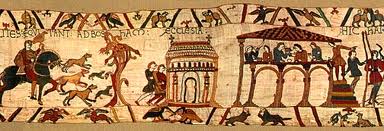
Bayeux Tapestry

Today I read an interesting article on the BBC website about a movement in northern England to reintroduce the former Anglo-Saxon kingdom of Mercia and separate from England.

What’s new there? There are several regions around the world who would like to do the same thing and separate from the countries in which they find themselves; Crete and Quebec come immediately to my mind and there are many more. It may be for different reasons (cultural, monetary etc.) but the overarching perspective, I suppose, is a belief that the current government, in whichever region we are talking about, is just not cutting it, not governing for the benefit of the people.

According to this article (http://www.bbc.co.uk/news/uk-politics-17822919), that is the case in northern England.

Pericles' Funeral Oration in Athens
I’m a big believer in learning from the past, no surprise there! If everyone could just remember and learn from past mistakes, so many troubles could be avoided. Unfortunately, it sometimes seems that it is the doom of humankind to repeat history, perhaps a sad reflection of the cycle of life. We are part of a giant ourobouros devouring our own tail but making the circle smaller and smaller. Governments throughout history are by no means perfect. Ancient Greece gave rise to democracy but was it true democracy when most of the population was not permitted to participate, including women and slaves? Still there was something there. The Romans were well organized under the tribes in the Republic, but greed, bribery and threats were always at work behind the scenes. When the Empire came about, representation of the people was facial, a mere formality under the powerful Emperors.

I am by no means an expert on various forms of government. However, I can see the value of what the Mercia Movement in England envisions. Here is a bit from the article, quoting a representative of the movement:

The Roman Senate
"The Mercia Movement therefore aims to act as a catalyst in the removal of the Establishment and in the re-empowerment of the ordinary people of the country. Mercia remains a legally autonomous region and we intend to re-create its independence in reality.
"Anglo-Saxon England provides a vital historical model which proves that a society based on community, organic democracy and environmental harmony is not a dream, but an achievable ideal."


Reading this, my first thought is that it is hopeful, idealistic (like me!) and sadly, unlikely. Central governments are not likely to give up chunks of their countries, nor are banks likely to give up their stranglehold on all of them. But the idea of grassroots democracy is a good one and though the Saxon version of it, with its ‘moots’ and ‘witans’, was by no means foolproof, at least something like that would provide the people with an opportunity.


As I read the news, speak with people from around the world, it seems to me that people are more and more desperate, lost in helpless mindset. Greece now, is a perfect example. Elections in Greece are coming up soon and as we all know, the people of that country have been battered and bullied of late. People will vote, they have too, but what are their choices? One corrupt party over another? The politicians are so corrupt, they have resorted to stealing money from the middle and lower classes, the people who need the most help. Bonds have been taken from people illegally with no sign of repayment. And they will get away with it. What can people do?
A peaceful protest in Athens

The word ‘idiot’ comes from the ancient Greek word ‘idiota’ which was used to describe someone who does not get involved in their local ‘demos’, who does not use their democratic voice. It is interesting that the ancients, those who invented democracy, had such a word. Yet today, so many people in our own communities do not get out and vote, do not get involved. How then can we complain?

I am contradicting myself here. On the one hand, we should get involved. On the other, the choices of politicians are, more often than not, poor indeed. I don’t have an answer and I am sure that this topic will spark many a heated dinner time debate over meat and mead (or wine!).

There is an argument for monarchy here also, for they would have a vested interest in keeping a country running smoothly if not for themselves then for their heirs, their children’s children. A monarchy thinks more of the long-term health of itself and, ideally, its subjects.

At the end of the day, the Saxons had Robin Hood to speak for them. But, short of putting black-goose fletched arrows in the sheriff’s men’s backs, peaceful protest and grassroots community involvement are good ways to get involved and make your voice heard. Finally, stop electing real ‘idiots’!

Saturday, April 21, 2012

The World of Children of Apollo - Part III - The Severans

The Severans were a very interesting family and not without their tales of violence and greed and uniqueness of character. The period is not marked by something so brutal as the psychotic reign of Caligula but there are certainly many more dimensions. It is a time of militarism, of a weakened Senate, a time of spymasters in various camps. It is a time marked by the rise of lower classes, the presence of powerful women and, over it all, a blanket of religious superstition at the highest levels. Many believe that it is this period in Rome’s history that marks the true beginning of the end of the Roman Empire.

The emperor at the time that Children of Apollo takes place is Septimius Severus (A.D. 193-211). He was the son of an Equestrian from Leptis Magna in North Africa. When Commodus was killed in A.D. 192, Severus was governor of Pannonia. When the Praetorians decided to auction the imperial seat a short time later, Severus’ legions declared him Emperor. He subsequently defeated his two opponents who had also declared themselves Emperor: Clodius Albinus and Pescennius Niger. A purge of his opponents’ followers in the Senate and Rome made Severus sole ruler of the largest empire in the world.
Septimius Severus

Septimius Severus was a martial emperor, the army was his power and he knew how to use it, how to keep the legions loyal and happy. He increased troops’ pay and in a radical move, allowed soldiers to get married. Severus was good to his troops, his Pannonian Legions and victorious Parthian campaigners. He promoted equestrians to ranks previously reserved for aristocrats and lower ranks to equestrian status. There was a lot of mobility within the rank system at the time due to Severus ‘democratization’ of the army. Remember, this was an emperor who favoured his troops, especially those who distinguished themselves. The Emperor is open and friendly with Lucius Metellus Anguis in Children of Apollo but, there are prices to be paid. No favour is free.

Julia Domna
One of the most interesting characters of the period is Severus’ Empress, Julia Domna. She appears as one of the strongest women in Rome’s history, an equal partner in power with her husband who heeded her advice but also respected her. Julia Domna was the first of the so-called ‘Syrian women’, she and her sisters hailing from Antioch where their father had been the respected high priest of Baal at Emesa (Homs in modern Syria).

Julia Domna was also highly intelligent, known as a philosopher, and had a group of leading scholars and rhetoricians about her. They came from around the Empire to be a part of her circle, to win commissions from her. No doubt, her strength also bought her a great many enemies, including the Praetorian Prefect and kinsman to Severus, Gaius Fulvius Plautianus. The conflict between the Empress and the Prefect of the Guard is something that will cause Lucius Metellus Anguis a good deal of trouble in Children of Apollo and the next novel. To boot, Plautianus’ daughter, Plautilla, was married to the Empress’ son, Caracalla. One can imagine what family gatherings must have been like!

Gaius Fulvius Plautianaus
Apart from the power, their keen ability to wield it, and their nurturing of the army’s loyalty, a very interesting and important aspect of Septimius Severus and Julia Domna is the great faith they both placed in astrology and horoscopes. They consulted with their astrologer and the stars on all decisions. Astrology affected everything, including Severus’ choice of her as his wife – he was greatly impressed by her horoscope.

By all accounts Caracalla and Geta, Severus’ heirs, were both at odds much of the time. The two brothers seem to have tolerated each other’s presence and competed fiercely, even in the hippodrome where at one point they raced each other so fiercely on their chariots that they ended up with several broken bones, almost leaving their father without his precious heirs. Caracalla seems to have been the favourite of the Empress though in much later years, Julia Domna does come to Geta’s defence, however much in vain.

Julia Mamaea
The Syrian women continued to hold power under the daughters of Julia Domna’s older sister, Julia Maesa who, herself, managed to save the dynasty for a time after the death of Caracalla. Julia Maesa was the mother of Julia Soaemias and Julia Mamaea, both mothers in their turn, of the last Severan emperors, Elagabalus and Alexander Severus. These powerful women held the family together. However, in the end, under Alexander Severus, the loyalty of the army was lost and, what once gave the Severans their ultimate power, became their downfall.

There is a lot more to each of the people I have mentioned so briefly here and it is a part of Roman history that is not often explored. However, the Severans made their mark on the Empire and brought about massive changes, from artwork to marriage for legionaries, to a crippling of the Senate and the extension of Roman citizenship to people all over the Roman Empire. They were strong, religious, varied and flawed and all make for fantastic fiction!

Caracalla
In the next instalment of The World of Children of Apollo, we’ll be heading to Ostia and Rome itself, in Lucius’ footsteps as he leaves North Africa to return home after many years. If you are up for a Roman holiday, be sure to check it out!

Book Trailer now posted: to view the new book trailer for Children of Apollo on You Tube, go to the link at the top right of this blog.

Tuesday, April 17, 2012

Children of Apollo - E-Book now available

At long last, the battle for formatting has been won and Children of Apollo, Book I in the Eagles and Dragons series, is now available as an e-book.

If you are interested, and count yourself among the technologically-inclined, you can get this from Amazon in the United Kingdom, Germany, Spain, France, Italy and of course, the U.S. Canadian customers can purchase from Amazon.com.

For those of you with iPads, Kobos, Sony Readers, Nooks etc., never fear. Children of Apollo will be available for those devices in a few weeks.

In the meantime, be sure to visit the new Eagles and Dragons Facebook page. Also, Part III of The World of Children of Apollo will be posted very soon, so, watch this space. This time, we'll be meeting the Severans.

Cheers and happy reading!

Thursday, April 12, 2012

The Makings of a Hero

Jason
Once having traversed the threshold, the hero moves in a dream landscape of curiously fluid, ambiguous forms, where he must survive a succession of trials. This is a favourite phase of the myth-adventure. It has produced a world literature of miraculous tests and ordeals. The hero is covertly aided by the advice, amulets, and secret agents of the supernatural helper whom he met before his entrance into this region. (Joseph Campbell)

In Joseph Campbell’s seminal work, The Hero with a Thousand Faces, the author looks at the various traditions and archetypes that make up heroes in cultures from around the world and the common journeys those heroes must make.

Heroes are prominent in history, legend and literature. The hero is essential to storytelling. We have myriad examples of heroes and heroines from Greek, Roman and Celtic mythologies, Arthurian Romance and countless other traditions. Heroes might be flawless or, they might be of the dregs of society. Whether fighting beneath the walls of Troy or in the world of Tolkien, heroes dominate and drive story. As do their adversaries; the bigger the foe, the greater the hero.
Herakles

But what makes a hero? What is it that sets the hero apart from the rest? The answer to this is not necessarily a simple one. The answer is also subjective, depending on a person’s perspective. A hero to one may be a villain to another. Take Achilles as an example. To the Greeks fighting at Troy, he was the ultimate hero; fearless, skilled, destructive to their enemies. However, to the people of Troy, he was their worst nightmare, spoiled, selfish, arrogant, the slayer of their city’s favoured son. We each have our own idea of what a hero is. Mine is shaped by the stories on which I was raised. I grew up on Arthurian romance, Tolkien and Star Wars. Arthur, Aragorn and Luke Skywalker were ever in my mind, firing my imagination and now influencing my own stories.

Heroes all have a journey to make. That is compulsory. Whether it is Herakles and his twelve labours or Joan of Arc from the time she heard the voice to the time of her death. The hero’s journey has particular steps along the way. At first there is a level of naïveté followed by an event that sets things in motion. There are challenges and adversity. There are choices the hero must make and ultimately, it is those choices that determine how others will view the hero, how the hero will view himself. For me, it might end with the hero putting others, or some greater cause, above himself. Gods (and stories!) often require sacrifice and the hero is the one who will step to the fore despite hardship, despite pain, despite fear.
Perseus

When I started writing Children of Apollo, the first book in my Eagles and Dragons series, I wanted to create a protagonist who could stand out in ancient Rome while at the same time maintain a measure of honour. Making it big in ancient Rome certainly did not mean you were good. However, as with all heroes, I soon realized that it was going to be the journey that Lucius Metellus Anguis would make that was important. People grow with experience and the learning never stops. I have not completed the series and, being a writer who likes things to develop in an organic way, I do not yet know what sort of hero Lucius will turn out to be. He has a lot more to experience, fears to face, and not until his death perhaps, will I know if he has the makings of a true hero.

Lancelot
I have but scratched the surface of this topic, sketched a brief image of what are, I think, some of the main qualities of a hero. All people have the potential for good or evil. To me, the hero ultimately chooses the side of good. He may have made mistakes along the way, but that makes him human and someone we can relate to all the more.

Whether a peasant or a demigod, a warrior or a mother, a king who loves and defends his subjects or a father who loves and defends is family, we all have our own heroes, real or imagined. At the end of the day, heroes across the ages are those who inspire us to goodness. They are the ones who, even in the darkest of times, are that one spark of light and hope that will kindle the fire in which good can overcome evil. They are present now, in history and in fiction and their deeds will continue to resonate through the ages.